SAFER ISN’T SAFE
Three Years Out from East Palestine, Railroad Safety Still Has a Long Way To Go

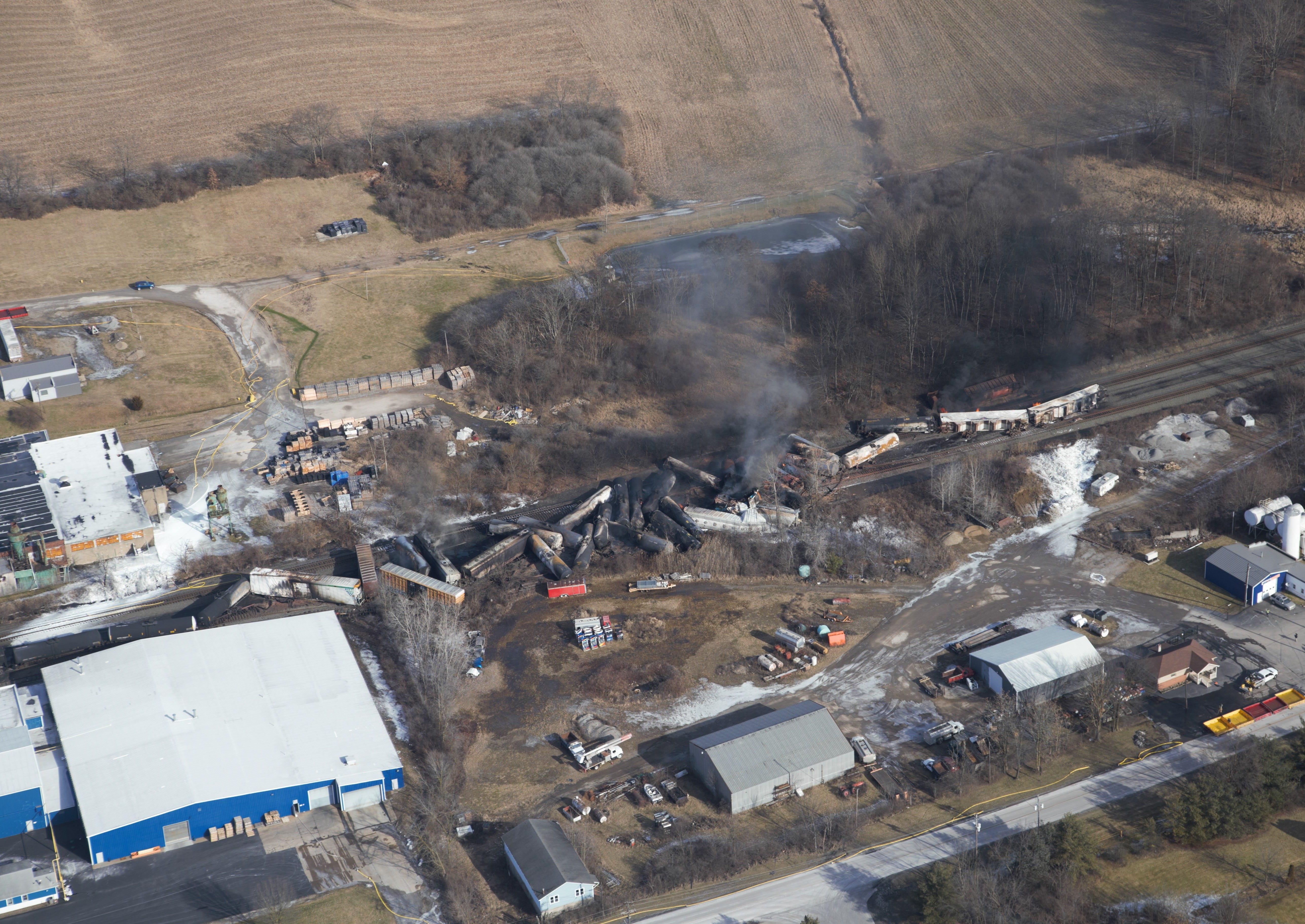
It has been three years since the East Palestine derailment of February 2023, when thousands had to be evacuated from a small Eastern Ohio community after multiple tanker cars containing the hazardous chemical vinyl chloride derailed, throwing rail safety into the mainstream.
In the political fallout from the accident, new regulations on freight rail were proposed in the House but eventually died in the Senate. Now those reforms are back in Washington, reintroduced to both the House and Senate as the Bipartisan Railway Safety Act of 2026.
“Three years ago, many Ohioans understandably lost faith in the safety and reliability of our nation’s railways after the accident in East Palestine, Ohio,” said Republican Senator Jon Husted in a February press release. “By using a balanced, data-driven approach to advancing rail safety, my bill would protect Ohio’s communities while supporting the freight rail industry across the country.”
This, understandably, has caused some bristling in the press, such as in one March 8th Washington Post editorial, which reads, “It’s understandable that Congress wanted to do something. But [...] the bill consists of unrelated mandates that would drive costs higher and slow innovation.”
As it goes on, the editorial boasts about just how safe the American railroad is, claiming that this legislation is both ignorant and wholly unwarranted. Claims that would be a lot easier to take seriously if, on the day before the piece ran, Norfolk Southern, the same railroad responsible for what happened in Ohio, managed to put a train on the ground on the iconic Horseshoe Curve just outside Altoona, PA.
This led to the delay or cancellation of upwards of 50 trains a day that use the curve while traveling over the busy former Pennsylvania Railroad mainline between Philadelphia and Pittsburgh, including Amtrak’s services along the line.
Far from an isolated event, this comes just after Norfolk Southern had another derailment in the same area earlier this year when 60 cars derailed on February 6th.
Just while writing this story, 23 tanker cars off a Union Pacific train derailed in the Houston suburbs Wednesday, two of which started leaking ethanol, and just today, March 19th, another Union Pacific train derailed in California.
Do American railroads have a culture of safety? Maybe. What they definitely do have is a culture of putting cars on the ground, especially ones full of hazmat chemicals that are best summarized by the phrase “don’t breathe that in, folks.”
So, back on Capitol Hill, are there issues with the Bipartisan Railway Safety Act? Sure. Legislation is very rarely flawless.
But the bill also proposes doing things like prohibiting railroads from imposing time requirements on car inspections, increasing penalties for safety violations, and requiring two crew members to operate a train (something that in earnest should have been done immediately after the 2013 Lac-Mégantic disaster that killed 47), which are all worthwhile proposals.
Furthermore, it’s worth pushing back on the idea that scrutiny on the rail industry is somehow unwarranted. Stop condescending to lawmakers by saying this bill is just the emotional spillover from what happened in East Palestine.
It’s true that the railroad is far safer than trucking, as Michael F. Gorman pointed out in his recent article for Fortune, writing, “In the 50 years that the Bureau of Transportation Statistics has collected data on fatalities by mode, trucks have caused nearly 30,000 deaths, while rail has caused less than 500—less than 2%.”
But facts like that should be evidence for why we should take more trucks off the road, not a justification for being satisfied with where the industry is currently. Rail safety has undoubtedly improved over the past few decades and has thankfully moved far away from the era when a brakeman having all 10 fingers was seen as a sign of inexperience and when each of the nation’s large railroads would kill hundreds a year without a thought.
But we were only able to move past the era because there was pressure to do better, and if we want to keep what happened in East Palestine from happening again and again, we must assert that a safe railroad isn’t one that’s satisfied with incremental improvements in year-over-year accident percentages.
A safe railroad is one that is both constantly pushing and being pushed to eliminate major derailments and fatalities on the tracks entirely. That, a deathless railroad, would be something worth being satisfied over.